
Birdie Fortescue's Amunet Collection Turns Egyptian Tomb Details Into Everyday Home Décor
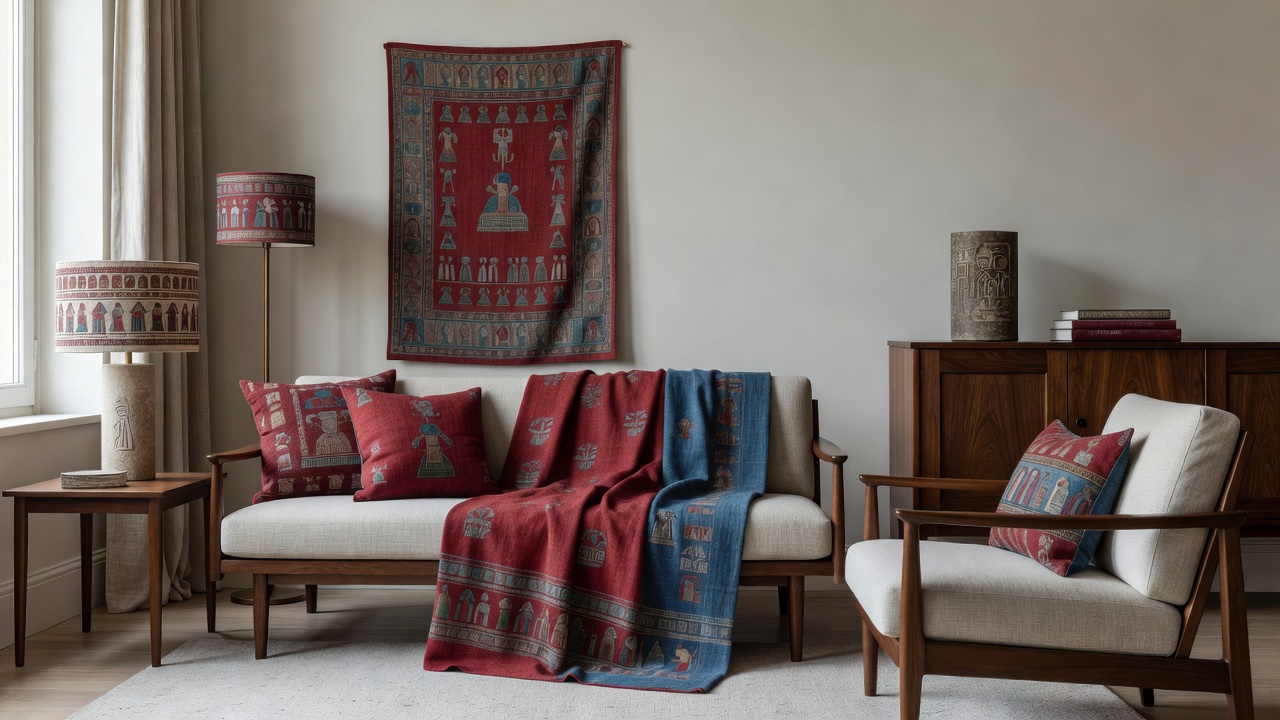
British interior designer Birdie Fortescue has released Amunet, a homeware collection for autumn and winter 2026 inspired by painted borders, motifs and colour pairings she photographed during a trip to Egypt. Rather than reproducing ancient designs, the collection reinterprets fragments she found in tombs and monuments for use in contemporary rooms.
From travel photographs to design sketches
Fortescue says the research began on the road. She photographed small details in particular, including repeating patterns within borders, the shape of individual motifs and unexpected pairings of two colours. Back in the studio, those observations became starting points: a minor decorative element could be scaled up into a larger geometric textile, while the rhythm of a painted border could inform the repeat on a lampshade.
Why the name Amunet matters to the design
The collection takes its name from Amunet, a goddess whose name is often translated as "the hidden one." Fortescue links that meaning to what drew her to Egypt: the most affecting details were often the ones revealed only on closer inspection. Some motifs in the range may not read as Egyptian at first glance, and the designer treats that subtlety as deliberate.
What the collection includes
The range combines patterned and embroidered textiles, lighting, accessories and furniture. Fortescue describes a palette of deep reds, dusky blues and earthy greens, paired with natural materials and walnut. The furniture is intentionally more restrained, drawing on mid-century continental design to balance the more decorative pieces. Fortescue, who has worked as an antiques dealer, says she considers how each new piece will sit alongside older objects, aiming for designs that can become part of a home over time.
What the collection does not claim
Fortescue presents Amunet as a personal response to her travels, not a reproduction of Egyptian design or a historically accurate record. Readers considering the pieces for their own homes can judge them on their proportions, materials and how well the patterns suit their existing furnishings.