
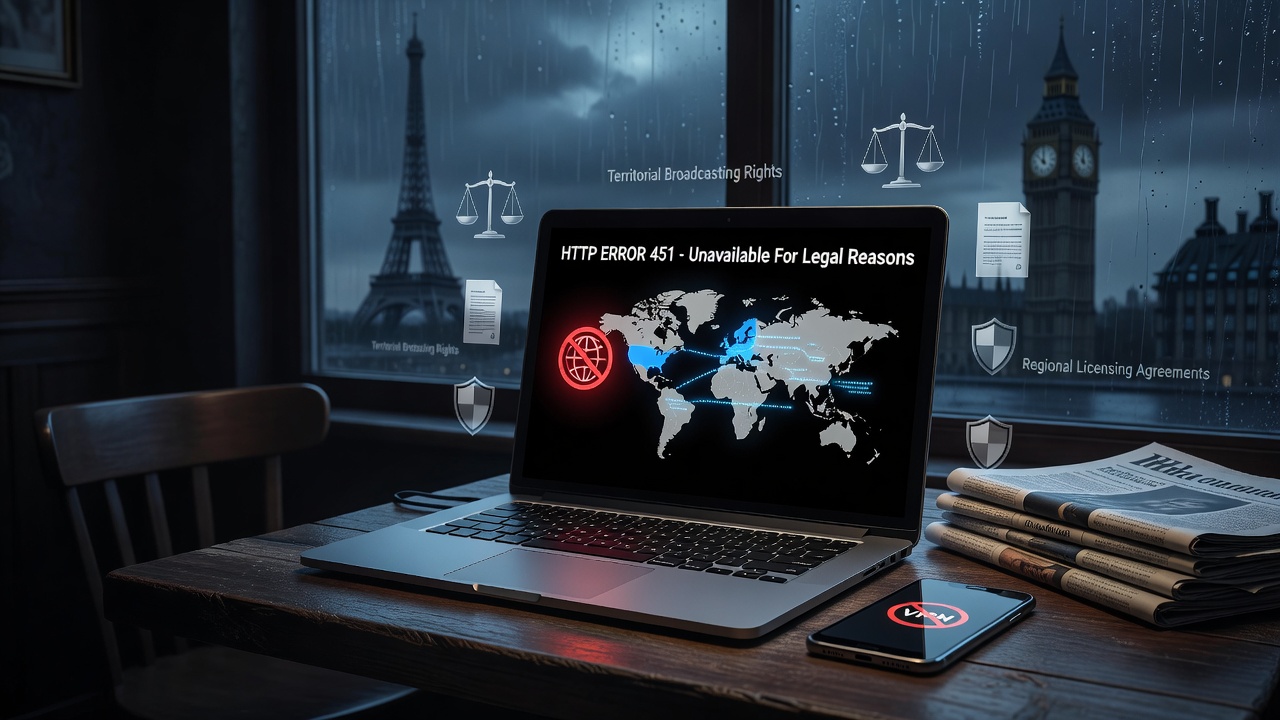
Readers outside the United States who try to open this page are shown a notice that access is not available from their location, along with an HTTP Error 451 code. The message says the site cannot be reached from countries outside the US at this time. The page supplies no further reporting, so the reasons behind the restriction are not stated.
What the error code means
HTTP status 451 is a standard code meaning that a resource is unavailable for legal reasons. Servers use it when a provider restricts content in response to a legal demand, a licensing agreement or a regional rule. The code tells the visitor that the block is deliberate, not a technical fault, but it does not say which law or contract applies. In this case, the notice describes the restriction only in geographic terms, based on the visitor's country.
Why publishers restrict access by location
Media companies often limit online content by territory for several practical reasons. Broadcast rights, local advertising agreements and privacy rules can differ from one country to another, and a publisher may not have the legal footing to serve readers abroad. Some sites also use location filters to reduce exposure to foreign legal claims. The page does not identify which of these motives applies to this site, so any explanation beyond the notice itself would be speculation.
What readers outside the US can do
If you are traveling or living abroad and need local news, check whether the outlet offers a separate international edition or an app with different availability. Many national broadcasters also publish free stories on their own sites. For material that is only available in the US, a library database or a subscription service may provide an official route. Using a virtual private network to get around a geographic block may breach the site's terms and can conflict with local rules, so it is worth reading the publisher's policy first.
What the notice does and does not tell us
The notice confirms that access is restricted based on location and that the restriction is intentional. It does not show that the content is illegal, and it does not explain the scope of the restriction or how long it will last. Readers who need a fuller answer should contact the publisher directly through its published support channels.